By Mees de Beukelaar
Why Short-Form Video Dominates Social Media
Short-form video has reshaped social media: algorithms and shrinking attention spans now favor quick vertical clips.
Originally published December 21, 2025
In this article
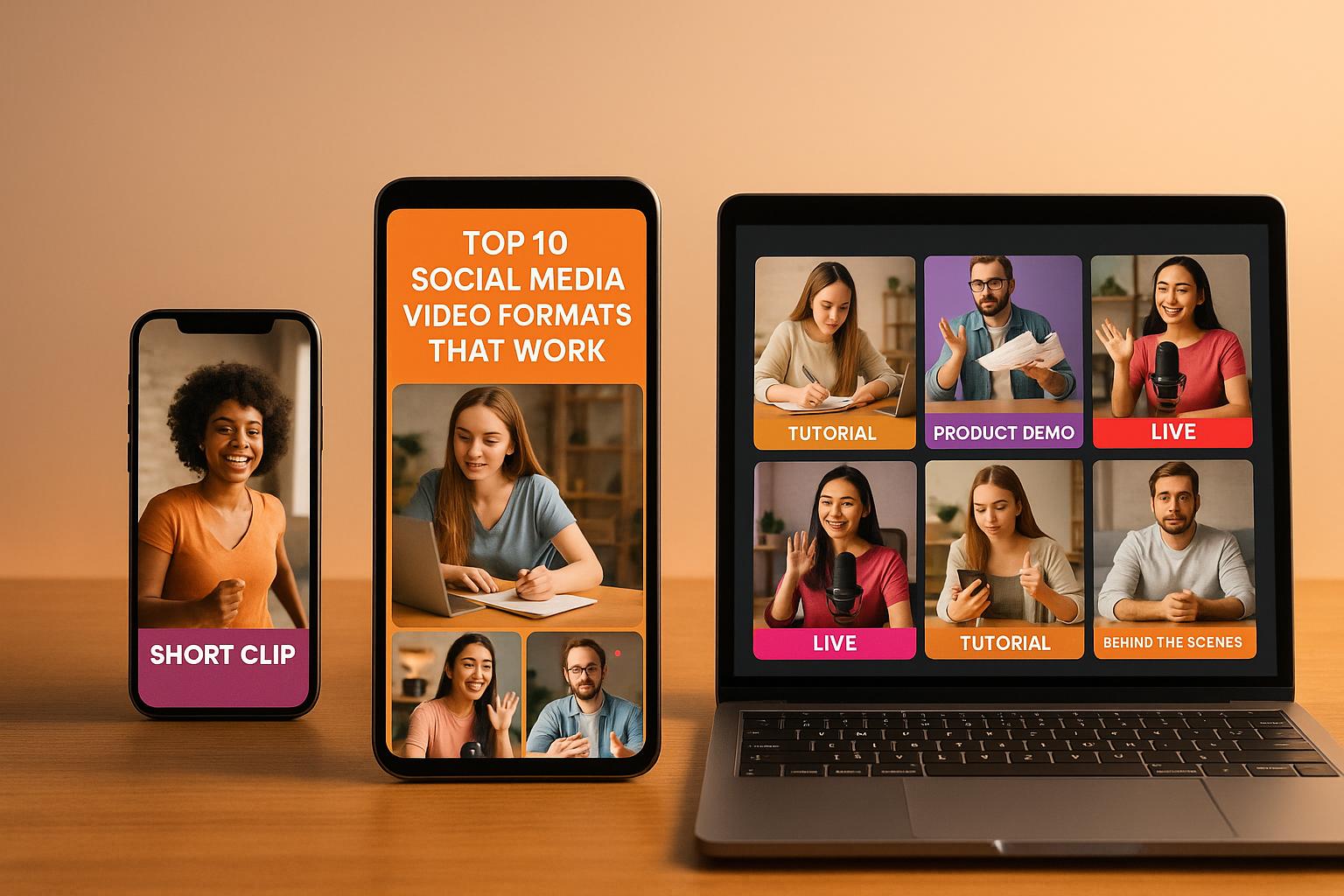
Short-form video is now the king of social media. Why? Because it fits perfectly with how people consume content today. Platforms like TikTok, Instagram Reels, and YouTube Shorts prioritize these quick, vertical clips because they keep users engaged and scrolling. Here's the gist:
- Attention spans are shorter than ever: The average is just 8 seconds, so 15-second videos hit the sweet spot.
- Algorithms love them: High completion rates and engagement metrics (likes, comments, shares) mean short videos get promoted more.
- Users prefer them: 85% of viewers favor videos under 15 seconds, and they’re perfect for “micro-moments” like waiting in line.
- Better results for brands: Short videos drive 2.5x more engagement and deliver higher ROI compared to other formats.
But it’s not without challenges - creators face burnout, platforms demand frequent posting, and monetization is harder with short content. Still, tools like AI-powered editors make it easier to produce and repurpose videos for multiple platforms.
Short-form video isn’t just a trend - it’s how we connect, entertain, and share today. If you’re not using it, you’re missing out.
Why Social Platforms Prioritize Short-Form Video
How Platform Algorithms Work
Social platforms are increasingly favoring short-form videos because they excel at grabbing attention and keeping viewers engaged. High completion rates are a key metric - when people watch a video all the way through, it signals to the platform that the content is engaging and worth promoting. Platforms like Instagram and TikTok also track "engagement density", which measures how much interaction (likes, comments, shares) a video generates per minute. This helps fine-tune their content recommendations.
Take YouTube Shorts, for example. It uses a two-step approach: first, a video is shown to a small test audience. If that group watches it through and interacts with it, YouTube then promotes the video to a larger audience. This system rewards creators who can hook viewers right from the start.
The concept of infinite scrolling adds another layer. As Dr. Yann Poncin from Yale University explains:
"Infinite scrolling and short-form video capture your attention just long enough for the algorithm to feed you the next recommendation."
This seamless cycle of content consumption not only boosts video visibility but also shapes how users engage with the platform.
What Drives User Behavior
Algorithms may set the stage, but user behavior has shifted to embrace formats that offer quick, satisfying bursts of entertainment. Each swipe delivers a small "dopamine hit" - a jolt of humor, surprise, or novelty - that keeps users scrolling for more.
Attention spans have also shrunk dramatically. In 2004, people focused on a screen for about 2½ minutes at a time. Today, that average has plummeted to just 47 seconds. Dr. Gloria Mark, a psychologist studying digital habits, highlights this stark change:
"Back in 2004, we found the average attention span on any screen to be two and a half minutes on average... in the last five, six years, we found it to average about 47 seconds."
This shift makes short-form videos especially appealing. Unlike longer formats, they don’t demand much mental effort. As Debbie Moran from RecurPost explains:
"Short-form video requires no long-term investment, so it feels effortless and stress-free. There's no need to track a storyline or remember where you left off."
Short videos also fit perfectly into "micro-moments" - those brief pauses in a busy day, like waiting in line or commuting. This convenience has even turned TikTok into a go-to search engine for many users. Nearly 1 in 10 Gen Zers now prefer TikTok over Google for finding information. The numbers back this up: U.S. TikTok users spend an average of 108 minutes per day on the app, Android users globally devote 34 hours per month, and YouTube Shorts hit 50 billion daily views by 2023.
While short-form content is thriving, it’s also creating new challenges for creators and brands trying to keep up.
Common Problems for Creators and Brands
The rise of short-form video has brought unique pressures, especially for creators. Algorithms reward frequent posting, pushing creators to churn out multiple videos weekly - or even daily - to stay visible. This relentless demand, often referred to as the "virality treadmill", can lead to burnout as teams struggle to maintain both quality and quantity.
Jasmine Enberg from Emarketer sums it up:
"It's never been easier to go viral. But it's never been harder to convert viral success into sustainable growth."
Another hurdle is the need to adapt content for different platforms. Each platform has its own technical requirements, and manually editing long-form content into bite-sized clips for multiple platforms can be a time sink, particularly for smaller teams.
Monetization is another sticking point. Despite racking up billions of views, short-form videos often generate far less revenue than long-form content. For instance, YouTube Shorts pays roughly $0.04 per 1,000 views. This makes it tough for creators to justify the time investment needed to produce consistent, high-performing content.
Finally, the shift from social connections to algorithm-driven recommendations has changed the game. Even creators with loyal audiences can’t always rely on organic reach. Algorithms now judge each video purely on its performance metrics. As Sasha Kaletsky from Creator Ventures puts it:
"The user isn't looking for any specific creator, they are looking to be entertained."
The Rise of Short Form Video Content How it's Revolutionizing Marketing
Performance Advantages of Short-Form Video
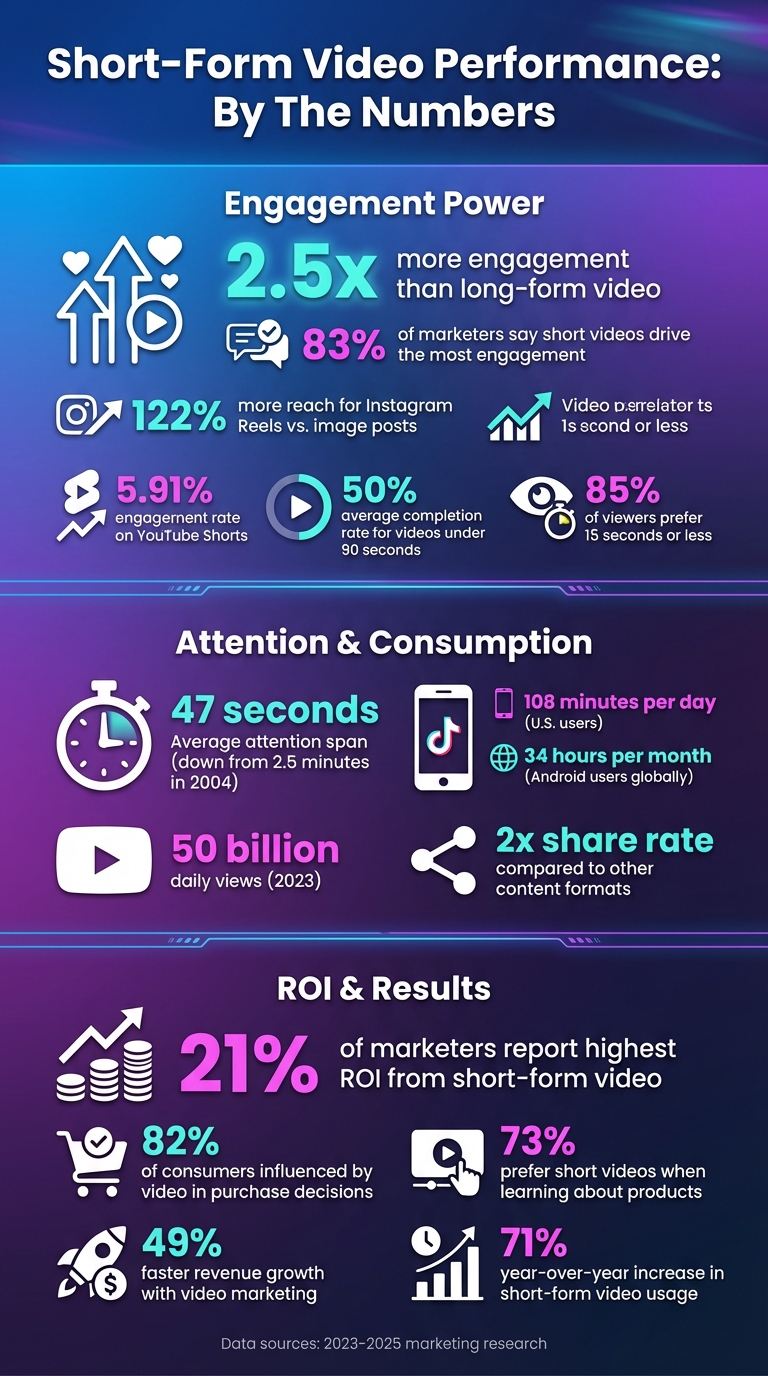
Short-Form Video Performance Statistics and Engagement Metrics 2025
Engagement and Reach Metrics
Short-form videos are a powerhouse when it comes to engagement. They generate 2.5 times more interaction than long-form videos on social media platforms. In fact, 83% of marketers confirm that short videos outperform all other content types in driving engagement.
Across platforms, the numbers speak for themselves. Instagram Reels deliver 122% more reach than image posts, while YouTube Shorts boast a 5.91% engagement rate. Videos under 90 seconds tend to hold viewers' attention, with an average completion rate of around 50%. Even more compelling, 85% of viewers prefer videos that are 15 seconds or less. This high retention signals to algorithms that the content is worth promoting, creating a cycle of increased visibility and engagement.
A striking example of this comes from Zillow. In 2025, they shared a two-minute video about market heat indexes, which received just 8 likes. Reformatting the same topic into a 39-second YouTube Short, however, earned them 574 likes - proving how shorter content can dramatically boost interaction.
The viral appeal of short-form video is undeniable. Users share video content at twice the rate of other formats, and usage of short-form videos has surged by 71% in just one year. Duolingo tapped into this trend with a 20-second skit featuring viral audio, which racked up an impressive 57.7 million views.
Business Results and ROI
Short-form video isn't just about engagement - it delivers real business results. Twenty-one percent of marketers say it provides the highest ROI, with 30% making it a core part of their strategy. Video marketing as a whole accelerates revenue growth by 49% and plays a critical role in consumer purchase decisions.
The numbers back this up. 82% of consumers report that watching a video has influenced their buying choices, and 73% prefer short-form videos when learning about new products or services.
Take Dr. Squatch, for example. In September 2025, the men's grooming brand saw 250,000 short-form videos watched on its site. Visitors spent an average of 1 minute and 40 seconds per video, adding up to over 5,800 hours of viewing time. Similarly, Sephora used 20-second TikTok makeup tutorials to showcase specific products, which directly drove in-store foot traffic as viewers sought to try the featured items themselves.
Brands that fail to embrace short-form video risk falling behind competitors who are already meeting consumers where they spend the majority of their time.
Content Format Comparison
Here’s how short-form video stacks up against other formats:
Metric Short-Form Video Long-Form Video Static Images Engagement Rate 2.5x higher than average Moderate; requires high viewer intent Lowest; 122% less reach than Reels Completion Rate ~50% for videos under 90 seconds Drops sharply after 2 minutes N/A (instant consumption) Reach Growth 71% year-over-year increase Steady; depends on search traffic Declining; algorithms favor video Viral Potential Highest; 2x share rate vs. other formats Low; typically educational/niche Moderate; meme-dependent Consumer Preference 85% prefer videos 15 seconds or less Preferred for complex topics Declining preference overallThese metrics explain why Instagram Reels consistently lead in reach, why YouTube Shorts attract more views and likes per video than traditional uploads, and why small creators like "Handmade Cards by Shairy" have turned short videos into global success stories. By sharing Reels of her card-making process, Shairy’s videos reached millions and landed her major brand partnerships. It’s clear that short-form video isn’t just a trend - it’s a format that creators and brands can’t afford to ignore.
sbb-itb-5598afdHow to Succeed with Short-Form Video
Build a Short-Form Content Plan
Start by setting clear, measurable goals using audience analytics. Whether you're aiming to increase brand awareness, drive traffic, or generate leads, having specific objectives will keep your efforts focused.
Next, develop content pillars to guide your video topics. These could include educational tutorials, behind-the-scenes looks, or customer success stories. This approach ensures your content stays varied while still aligning with your brand. A good rule of thumb? Aim for a mix of evergreen content (about 70%) and trend-based videos (around 30%) to balance reliability with relevance.
Take inspiration from Marriott's #30stays300days TikTok campaign. They partnered with creators to explore 30 hotel brands, using user-generated content and well-chosen keywords to attract travelers searching for inspiration. Tailor your video length, style, and metadata to each platform: TikTok thrives on trends and search, Instagram Reels encourages shares and saves, and YouTube Shorts excels at discovery.
Consistency is key. Post regularly - whether daily or weekly - and customize your captions, hashtags, and formatting to suit each platform's unique style. With more than 80% of global mobile data consumption driven by short-form videos, having a structured plan is non-negotiable.
Once your plan is in place, consider using AI tools to streamline content production and repurposing.
Use AI Tools to Repurpose Content
AI tools make it easier to break down long-form content into multiple short clips - a process often called content atomization. For example, a one-hour podcast can be turned into 5 to 15 short videos. This approach helps creators maintain a steady flow of high-quality content without constantly chasing the next viral trend.
Platforms like OpenClip simplify this process. They analyze long-form videos to identify high-impact moments based on speech patterns, facial expressions, and engagement potential. Editing becomes faster with transcription-based tools, where you can adjust video content by editing text. OpenClip’s smart reframing feature automatically converts horizontal videos into vertical formats (perfect for mobile viewing) while keeping the subject in focus - essential since 85% of viewers prefer videos under 15 seconds.
Other time-saving features include removing silences and filler words, which can reduce editing time by up to 90%. OpenClip even assigns virality scores to help identify your strongest clips and adds animated captions, a must-have since 75% of users watch videos without sound. It also supports scheduling across platforms like TikTok, Reels, Shorts, X, and LinkedIn.
"One hourlong podcast can range from five short clips to 15." - Danya Baratli, Co-founder, Shortzy
OpenClip’s pricing is accessible too. At $9 per month, the Pro plan offers watermark-free videos and 180 minutes of processing - enough to turn several long-form videos into a month’s worth of short-form content. For agencies or growing brands, the Business plan at $29 per month adds team collaboration features and 360 minutes of processing.
After repurposing your content, focus on tailoring each video to match the platform it’s posted on.
Create Platform-Optimized Videos
In the fast-paced world of short-form video, the first 3 seconds are critical. Use a strong hook right away - a surprising statement, a bold question, or dynamic visuals - to grab attention before viewers scroll past. Chili’s nailed this with Instagram Reels featuring vibrant food clips paired with trending audio, achieving higher reach than their static posts.
Always record in 9:16 vertical format to make full use of mobile screens. Keep captions in the safe zone (usually the lower center of the screen) to avoid interference from platform overlays. Since most users watch videos without sound, bold text overlays and accurate captions are essential.
Structure your videos strategically: start with an attention-grabbing hook (1–4 seconds), follow up with a quick value statement, and finish with a clear call-to-action. Keep videos between 31 and 60 seconds for a balance of engagement and completion rates. For added algorithmic reach, create videos without an obvious start or end point to encourage looping.
"The easiest path is to imitate what's already viral. If you're a D2C brand, go to your verticals, see what types of videos they're creating, and literally do the same exact video." - Diego Vetencourt, Co-founder, Shortzy
Avoid posting identical videos across platforms. Adjust captions, hashtags, and layouts to fit each one. TikTok, for instance, emphasizes searchability and watch time, Instagram Reels rewards engagement through shares and music, and YouTube Shorts focuses on view-to-swipe ratios. With Gen Z increasingly using TikTok as a search engine for tutorials and reviews, including relevant keywords in your captions, hashtags, and on-screen text is more important than ever.
Conclusion
Short-form video continues to dominate because it caters to the need for quick, impactful engagement. Platforms reward these bite-sized clips with greater organic reach, while audiences appreciate how quickly they can consume and enjoy the content. The data makes it clear: short-form video has become a core part of how we communicate online.
To succeed, creators need a streamlined system that transforms long-form content into concise, platform-ready clips. This method not only boosts discovery and conversions but also prevents burnout and ensures a consistent publishing schedule. It also signals to platforms that you're serious about creating valuable content.
AI tools like OpenClip make this process both practical and affordable. For just $9 a month, their Pro plan offers 180 minutes of processing time - enough to turn long-form videos into an entire month’s worth of short clips. Features like automated transcription, video reformatting, and multi-platform scheduling simplify the entire content creation process.
Incorporating AI into your workflow saves time and energy, giving you the freedom to focus on what matters most: connecting with your audience. As we look toward 2025, staying competitive means crafting content strategies that are efficient, thoughtful, and tailored to each platform's unique demands.
Short-form video isn’t just about pleasing algorithms - it’s about meeting your audience where they are, delivering content in their preferred format, and respecting their limited time. By embracing this approach, you can build stronger connections with your audience and maintain a competitive edge in the ever-evolving digital landscape.
FAQs
How can brands consistently create and share short-form video content without burning out?
Brands can make their short-form video strategy more efficient by batch-creating content. Instead of filming daily, dedicate a single session to recording multiple ideas. Then, edit these into bite-sized clips and schedule them using a content calendar. This method not only saves time but also guarantees a steady stream of posts.
Tools powered by AI, like OpenClip, can make this process even easier. These tools can take long-form content and break it down into ready-to-post clips for platforms such as TikTok, Reels, Shorts, and LinkedIn. They handle tasks like transcription, speaker detection, and clip creation, cutting down on manual work.
To keep their strategy effective, brands should regularly analyze performance data. This helps pinpoint which video formats, hooks, or trends resonate most with their audience. By focusing on what’s already working and repurposing existing assets like product demos or customer testimonials, brands can maintain a consistent and engaging presence without reinventing the wheel for every post.
How do AI tools enhance short-form video creation?
AI tools are game-changers when it comes to making short-form video production faster and easier. They can handle tasks like transcribing videos, identifying speakers, and breaking down long-form content into bite-sized clips tailored for platforms like TikTok, Reels, Shorts, X, and LinkedIn. Plus, they ensure your videos align perfectly with each platform's specific format, length, and captioning guidelines - all in just a few minutes.
By taking over time-consuming tasks such as editing, adding subtitles, and even suggesting trending styles, AI frees creators to focus on what truly matters: storytelling and creativity. The result? A steady flow of content that not only looks polished but also drives engagement across social media.
Why are short-form videos more engaging on social media?
Short-form videos are great for grabbing attention quickly and keeping viewers engaged - perfect for the fast-moving world of social media. Their bite-sized nature makes them easy to watch, while their ability to evoke strong emotions often prompts users to like, comment, and share. On top of that, social media algorithms tend to favor video content, giving these short clips a better chance of reaching more people and driving higher engagement compared to static images or longer videos.
For creators, this means the focus should be on crafting visually striking, concise stories that connect with viewers in just a few seconds.
Turn one video into a week of content.
Try OpenClip free