Top 10 Social Media Video Formats That Work
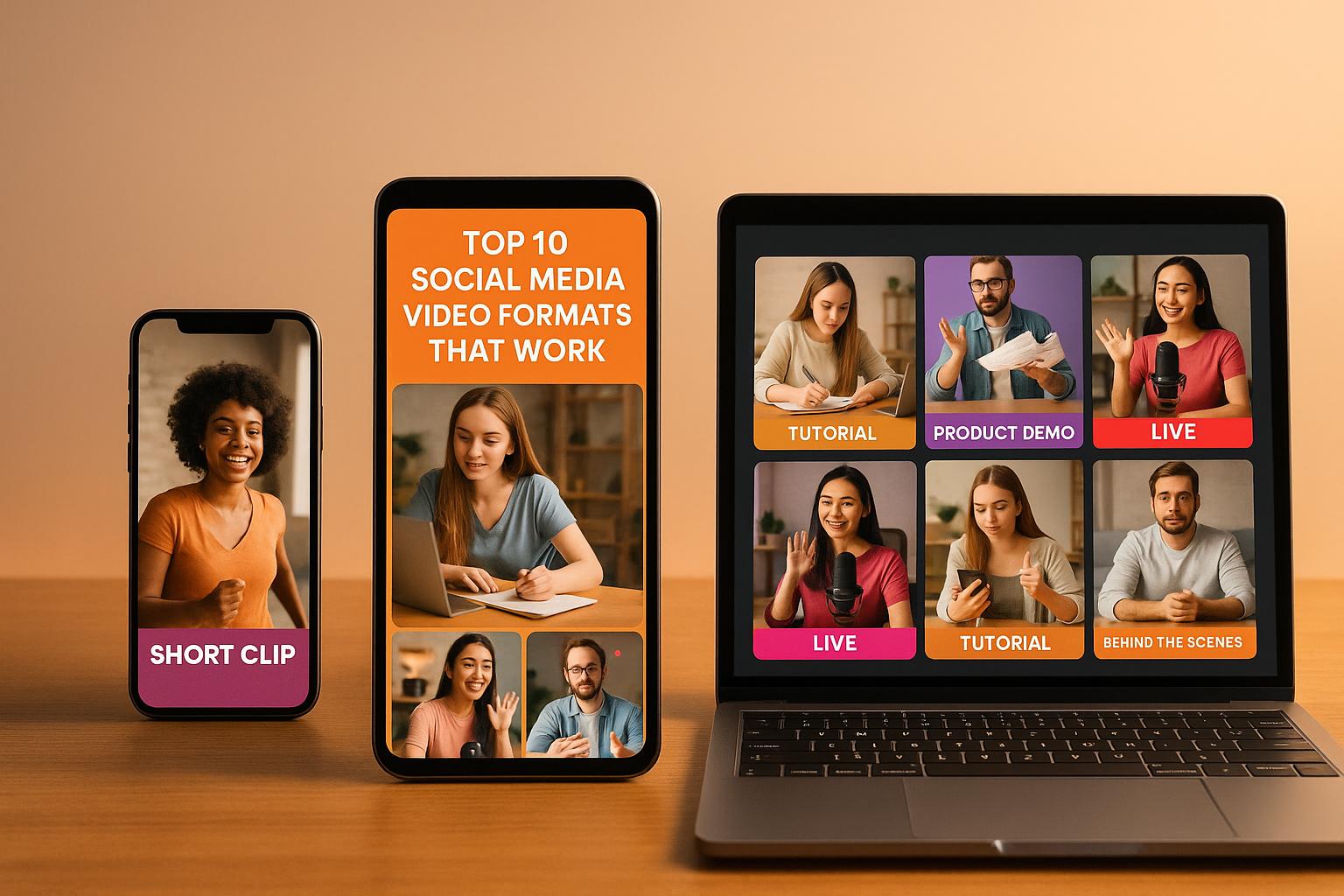
Explore the top 10 social media video formats that drive engagement and sales, tailored for 2025's content landscape.
Originally published November 21, 2025
In this article
- Viral Short-Form Video Formats for 2025
- 1. Short-Form Vertical Videos
- 2. Long-Form Videos
- 3. Live Streaming
- 4. Interactive and Shoppable Videos
- 5. Behind-the-Scenes Videos
- 6. Tutorial and How-To Videos
- 7. User-Generated Content Videos
- 8. Story Videos
- 9. AI-Generated and Repurposed Clips
- 10. Data-Driven Video Formats
- Video Format Comparison Table
- Conclusion
- FAQs
Top 10 Social Media Video Formats That Work
Video is dominating social media in 2025. To thrive, creators and marketers must tailor content to platform-specific needs. This guide explores 10 proven video formats, from short-form vertical videos on TikTok and Instagram Reels to live streams, tutorials, and AI-generated clips. Each format serves distinct purposes, such as driving engagement, building trust, or boosting sales.
Here’s a quick breakdown:
- Short-Form Vertical Videos: Quick, mobile-friendly, and ideal for TikTok, Instagram Reels, and YouTube Shorts.
- Long-Form Videos: Great for storytelling and deep dives, especially on YouTube.
- Live Streaming: Real-time interaction for building connections.
- Interactive & Shoppable Videos: Perfect for e-commerce, allowing viewers to shop directly.
- Behind-the-Scenes Videos: Showcase your brand’s human side.
- Tutorials & How-To Videos: Solve problems and educate your audience.
- User-Generated Content (UGC): Build trust with relatable, customer-made videos.
- Story Videos: Temporary, casual clips for Instagram, Facebook, and Snapchat.
- AI-Generated Clips: Repurpose long videos into smaller, platform-ready formats.
- Data-Driven Videos: Use analytics to refine and target content effectively.
Each format has unique strengths, making a multi-format strategy essential for success. Whether you're aiming to entertain, educate, or sell, the right video type can help you connect with your audience and achieve your goals.
Viral Short-Form Video Formats for 2025
1. Short-Form Vertical Videos
Short-form vertical videos are a powerhouse for driving social engagement. These quick, 15–60 second clips are designed to grab attention instantly. Their vertical 9:16 aspect ratio fills the entire smartphone screen, creating an immersive viewing experience that keeps users scrolling for more.
What makes this format so appealing? It’s perfect for today’s fast-paced, content-hungry audience. Unlike traditional horizontal videos, vertical videos feel tailor-made for mobile consumption, making them feel more natural and engaging on smartphones.
Engagement Potential
Short-form vertical videos are engagement magnets on social media. They encourage immediate reactions - likes, shares, comments - all without disrupting the viewer’s scrolling flow. To make an impact, creators need to hook their audience in the first few seconds. Eye-catching visuals, bold text overlays, or intriguing questions work wonders here. The vertical format also enhances communication by making facial expressions more prominent and text easier to read, helping creators connect emotionally with their audience.
This high engagement has inspired creators to fine-tune their videos for specific platforms, ensuring they maximize reach and interaction.
Platform Compatibility
These videos shine across all the major platforms: TikTok, Instagram Reels, YouTube Shorts, Facebook Reels, and Snapchat. While each platform has its quirks - like TikTok’s preference for 15–30 second videos or Instagram Reels allowing up to 90 seconds - the vertical format remains universally compatible. A single video can easily be repurposed for multiple platforms, saving time and effort.
Tools like OpenClip simplify this process by automatically creating 9:16 vertical clips from longer videos, ensuring key moments are preserved and optimized for engagement.
Production Simplicity
Creating short-form vertical videos doesn’t require a Hollywood budget. Most smartphones can capture high-quality footage, and in-app editing tools are more than enough for basic adjustments. In fact, the format thrives on authenticity - polished, overly produced videos often don’t resonate as well as raw, spontaneous content. However, the short duration means every second counts, so concise storytelling is key.
Perfect for Mobile Audiences
These videos are tailor-made for mobile-first viewers, especially younger audiences. Their quick, easy-to-consume nature fits seamlessly into busy lifestyles - whether someone’s commuting, waiting in line, or taking a short break. To stand out, creators need to deliver value immediately, whether it’s through entertainment, education, or inspiration. In this space, creativity and authenticity matter far more than flashy production.
Next, we’ll explore other formats that expand on the engagement and accessibility of short-form vertical videos.
2. Long-Form Videos
Long-form videos offer creators the opportunity to dive deep into storytelling, tutorials, or any content that benefits from detailed exploration. Ranging from 10 minutes to several hours, this format allows for a complete narrative or in-depth explanation, fostering trust and a sense of authority with the audience. While they demand more time and attention from viewers, the payoff is often a stronger connection and lasting engagement.
These videos emphasize substance over brevity. For creators aiming to showcase expertise, share complex ideas, or create content that viewers can revisit, long-form videos are an ideal choice. The format lends itself to natural pacing, thorough explanations, and meaningful storytelling - key elements for building a loyal audience.
Engagement Potential
Long-form videos encourage a different kind of interaction - one rooted in commitment and community. When viewers dedicate 20 minutes or more to a video, it signals a deliberate investment of their time. This often translates into deeper engagement: comments are more insightful, shares are more deliberate, and the audience tends to be more loyal and invested in the creator's work.
To keep viewers engaged throughout, creators must focus on maintaining momentum. Techniques like using chapter markers, varying visuals, and pacing content strategically can make a significant difference. Additionally, the extended format nurtures parasocial relationships - viewers feel as though they’re spending quality time with the creator, which fosters stronger loyalty and a higher lifetime value for the audience.
Platform Compatibility
YouTube remains the go-to platform for long-form video content, thanks to its emphasis on watch time and viewer retention. The platform’s monetization model also incentivizes longer videos, making it financially appealing for creators to produce extended content. Facebook and LinkedIn have embraced longer videos as well, particularly for educational and professional topics.
Other platforms are adapting too. Instagram now supports videos up to 60 minutes, and TikTok recently increased its limit to 10 minutes. However, the audience’s expectations vary between platforms. YouTube viewers often look for polished, well-edited content, while TikTok’s audience expects the platform’s signature fast-paced energy, even in longer videos.
To maximize reach, creators often use tools like OpenClip to repurpose long-form videos into shorter clips, ensuring their effort goes further without requiring additional production.
Production Complexity
Creating long-form videos is no small task. They demand more planning, time, and resources compared to shorter clips. From scripting and shooting to editing, the process is more involved, and viewers expect higher production quality - clear audio, steady visuals, and thoughtful editing are non-negotiable when asking for a significant time commitment.
That said, this complexity can work to a creator’s advantage. The time and effort required to produce long-form content create a natural barrier to entry, reducing competition. Many successful creators use long-form videos as their flagship content, leveraging them to establish credibility and authority. They then repurpose this material into shorter clips for broader distribution, maximizing their investment.
Audience Fit
Long-form videos resonate with viewers looking for depth rather than quick entertainment. These audiences are often seeking education, detailed storytelling, or a genuine connection with the creator. They’re more likely to become loyal subscribers, purchase products, and engage deeply with the content.
This format shines in niches where detail and context matter - think technology, finance, cooking, or personal development. Even if the overall reach of long-form videos is smaller compared to short-form content, the audience they attract tends to be more valuable and engaged.
Because these viewers are selective, creators must prioritize consistency and quality. Tailoring long-form content to fit the expectations of each platform ensures it has the greatest possible impact.
3. Live Streaming
Live streaming bridges the gap between creators and their audience by offering real-time interaction. Unlike pre-recorded videos, live streams invite viewers to actively participate through comments, questions, and reactions. This format transforms passive watchers into engaged participants, creating genuine connections and fostering a sense of community. While structured storytelling in long-form videos has its place, live streaming adds a unique layer of immediacy and interaction that can't be matched.
What makes live streaming so compelling is its raw, unfiltered nature. Viewers get to see creators in real-time, complete with spontaneous moments and on-the-spot problem-solving. This kind of authenticity builds trust and keeps the audience coming back for more.
Engagement Potential
One of live streaming's greatest strengths is how it encourages interaction as events unfold. Viewers can share their thoughts, ask questions, and react in the moment, while creators can respond instantly. Features like polls and Q&A sessions add another layer of engagement, creating a two-way conversation that keeps viewers involved for longer stretches of time.
However, keeping that engagement alive requires effort. Creators need to actively respond to comments, answer questions, and guide the conversation to maintain interest. Without this interaction, viewers might lose focus and leave the stream.
Platform Compatibility
Each live streaming platform brings its own strengths to the table, making it important to choose the one that aligns with your goals:
- YouTube Live: Perfect for creators who want features like screen sharing, multiple camera angles, and automatic recording for replay. It's great for discoverability.
- Facebook Live: Ideal for reaching your existing audience, thanks to social sharing and notifications that alert followers when you go live.
- Instagram Live: A mobile-friendly option for casual, behind-the-scenes content and quick updates.
- TikTok Live: Tailored for short, engaging sessions that fit the platform's fast-paced vibe.
- LinkedIn Live: Aimed at professional audiences, making it a solid choice for webinars, industry discussions, and thought leadership.
No matter the platform, technical preparation is key to delivering a smooth experience.
Production Complexity
While live streaming skips the need for post-production editing, it demands a lot of upfront preparation. A strong internet connection, reliable cameras, clear audio, and proper lighting are non-negotiable for a professional-looking stream. Since there’s no editing safety net, planning is crucial.
Successful live streams often involve setting clear goals, creating a structured outline, and promoting the event ahead of time. Many creators prepare talking points, plan interactive elements, and rehearse to ensure the session stays engaging from start to finish.
Audience Fit
Live streaming resonates most with audiences who crave authentic, real-time interaction. These viewers tend to value the unpolished, genuine feel of live content and are often more loyal and engaged. Whether it’s gaming, fitness classes, cooking tutorials, or professional discussions, live streaming offers immediate feedback that strengthens the bond between creators and their audience.
To build a consistent following, many creators stick to a regular streaming schedule, giving viewers something to look forward to and encouraging repeat attendance.
4. Interactive and Shoppable Videos
Interactive and shoppable videos transform passive viewers into active shoppers by allowing them to click, tap, and purchase directly within the video. This format blends entertainment with commerce, creating a streamlined path from product discovery to purchase. Instead of just watching, viewers can explore products, get more details, and even complete a transaction - all without leaving the video.
What makes these videos so effective is how they simplify the customer journey. When viewers spot something they like, they can act on it instantly, avoiding the hassle of searching for it later or trying to recall what caught their eye. Let’s dive into how these features boost engagement and make shopping effortless.
Engagement Potential
Interactive elements like clickable hotspots, product tags, polls, and branching storylines keep viewers hooked. These features encourage active participation, often leading to longer watch times and better retention compared to traditional videos.
Shoppable videos take it a step further by turning interest into action. Viewers can click on items they see, check prices, read reviews, and add products to their cart - all without pausing the video. This seamless experience not only keeps them engaged but also drives conversions. Plus, interactive features generate valuable data, offering insights into which products and elements resonate most with viewers.
Platform Compatibility
Different platforms support interactive and shoppable video features in unique ways:
- Instagram: Offers strong shopping tools like product tags, shopping stickers in Stories, and the Instagram Shop tab, making it easy for users to browse and buy.
- YouTube: Provides merchandise shelves, product placement options, and Google Shopping integration. Its longer videos are perfect for in-depth product demos and tutorials with shopping links.
- TikTok: Features shopping ads and tools that let creators tag products directly in their videos. The platform’s algorithm ensures these videos reach users likely to be interested in the products.
- Facebook: Supports dynamic product ads and catalog integration, enabling businesses to create videos that automatically showcase relevant products to specific audience segments.
Production Complexity
Crafting effective interactive and shoppable videos requires more effort than standard video content. The challenge lies in blending entertainment with commerce naturally. Shopping opportunities must feel like a seamless part of the story, not a distraction.
This involves linking videos to product catalogs, ensuring accurate pricing, and testing functionality across devices. Many creators simplify the process by using e-commerce platforms with built-in tools for video shopping. As with any content, it’s important to balance the production effort with the potential impact.
Audience Fit
These videos resonate most with viewers who are already in the mood to shop or are open to discovering new products. For these audiences, the convenience of purchasing directly from the video is a huge draw.
Gen Z and millennials are particularly receptive to shoppable content. They’re familiar with social commerce and expect smooth, integrated shopping experiences. These groups often use social media to discover and research products, making them a natural fit for this format.
Busy consumers also appreciate the efficiency of shoppable videos. Instead of bookmarking items or trying to remember them later, they can buy on the spot when their interest is at its peak. This audience-focused approach aligns with the strategies discussed throughout this guide.
5. Behind-the-Scenes Videos
Behind-the-scenes videos give your audience a rare glimpse into the inner workings of your brand. They showcase the people, processes, and everyday moments that make your business tick. Unlike polished marketing campaigns, these videos thrive on their raw, unfiltered nature, offering genuine storytelling that resonates with viewers. From product development and team brainstorming sessions to creative workflows and daily operations, this format brings your brand’s story to life in a way that feels real and relatable.
People love to see the human side of the brands they support. They’re curious about the effort that goes into creating their favorite products or services. By sharing these moments, you not only satisfy that curiosity but also build trust and relatability, making your business feel more approachable.
Engagement Potential
Behind-the-scenes videos are engagement magnets because they feel personal and exclusive. Viewers enjoy feeling like they’re getting insider access, which fosters a sense of connection. This kind of content often sparks conversations - whether it’s questions about your processes, compliments for team members, or shared experiences from viewers. These interactions naturally boost your reach, as algorithms tend to favor posts with high engagement.
Platform Compatibility
Different platforms offer unique ways to share behind-the-scenes content:
- Instagram Stories and Reels: Perfect for quick snapshots of daily operations, team introductions, or workspace tours. The casual, fleeting nature of Stories complements the informal vibe of behind-the-scenes videos.
- TikTok: Ideal for showing creative processes, product development, or even lighthearted workplace moments. TikTok’s algorithm thrives on authentic, unpolished content, making it a great fit for this format.
- YouTube: Best for longer, detailed content like documentaries on product launches, in-depth facility tours, or team interviews. YouTube’s search functionality also helps users find your behind-the-scenes material easily.
- LinkedIn: A great platform for showcasing professional moments like team achievements, company culture highlights, or insights into business strategies. LinkedIn’s audience appreciates the more serious tone that aligns with professional content.
Production Complexity
One of the best things about behind-the-scenes videos is that they don’t require elaborate setups. A smartphone, natural lighting, and a bit of spontaneity are often all you need. The goal is to capture authentic moments, not staged ones. Whether it’s during brainstorming sessions, product testing, or team celebrations, keeping your camera ready can lead to some of the most engaging content.
That said, while these videos should feel casual, they still represent your brand. Strike a balance between authenticity and professionalism. Ensure your workspace is presentable, team members are comfortable on camera, and sensitive information stays out of frame.
Planning ahead can also help. Create a simple content calendar to identify key opportunities, like product launches, team events, or seasonal activities. This ensures you’re prepared to capture meaningful moments without forcing anything.
Audience Fit
Behind-the-scenes videos resonate especially well with audiences who already have some level of interest in your brand or industry:
- Existing customers: They love seeing how their favorite products are made, which reinforces their trust and loyalty.
- Potential customers: These videos provide an authentic glimpse into your company culture, values, and quality standards, helping them feel more confident about choosing your brand.
- Industry professionals and competitors: While it might seem risky to share internal processes, it positions your brand as transparent and confident, which can be a strength.
- Job seekers: Behind-the-scenes content gives prospective employees a sense of your workplace culture, making it a valuable tool for recruitment.
6. Tutorial and How-To Videos
Tutorial and how-to videos are all about solving real problems - whether it's learning a new skill, figuring out how to use a product, or completing a specific task. Unlike promotional videos that focus on selling, these prioritize teaching and providing value. This approach naturally builds trust and positions you as a reliable source of information.
A well-crafted tutorial has staying power. People are always searching for solutions, and when your video delivers what they need, they’re likely to come back for more. Over time, this can establish you as a go-to resource in your niche.
Engagement Potential
Tutorials are engagement magnets. By addressing specific challenges, they invite likes, shares, and comments. The comment section often becomes a hub for discussions, where viewers exchange tips, ask questions, and troubleshoot together. This kind of interaction not only extends the life of your content but also signals to platforms that your video is worth promoting to a broader audience.
Another perk? Tutorials tend to have high save and bookmark rates. Viewers frequently save this type of content for future reference, which tells algorithms that your video has lasting value. This dynamic can significantly boost its visibility over time, making tutorials a smart choice for various platforms.
Platform Compatibility
Different platforms cater to tutorials in unique ways. Knowing how to tailor your content for each one can make a big difference:
- YouTube is the go-to platform for in-depth tutorials. Its search-friendly setup makes it easy for users to find your content when they need help. Plus, the longer format lets you dive into detailed explanations, and YouTube’s algorithm rewards videos that keep viewers engaged.
- TikTok and Instagram Reels are ideal for bite-sized tutorials. These short formats force you to focus on the essentials, making your content quick and easy to digest. They’re perfect for teaching simple tricks or showcasing highlights from a longer process.
- LinkedIn works best for tutorials with a professional angle - like business skills, software walkthroughs, or industry-specific tips. The platform’s audience is often looking for ways to grow their careers or improve their work.
- Facebook offers flexibility. You can share both short and long tutorials here, and even combine your videos with detailed, step-by-step image posts for added clarity.
Production Complexity
The production level of your tutorial largely depends on your topic and audience expectations. You don’t need to go overboard; the key is to match the production quality to the content’s needs.
For screen recordings, invest in a reliable capture tool and focus on clear audio. A good microphone and a quiet setup can make a big difference. If your tutorial involves physical demonstrations, prioritize good lighting and clear camera angles. Natural light often works wonders, and multiple takes can help you capture the best version of each step.
Editing is where your tutorial can really shine. Trim unnecessary pauses, add text overlays for clarity, and include a quick preview at the beginning to hook viewers. You can also repurpose longer tutorials into shorter clips for platforms like TikTok or Instagram using tools like OpenClip.
Audience Fit
Tutorials are perfect for audiences actively looking for solutions. These viewers come with a purpose - they want to learn, solve a problem, or improve a skill - and that makes them highly engaged.
Whether you're targeting beginners who need step-by-step guidance, intermediate users looking for efficiency hacks, or advanced learners exploring new techniques, it’s crucial to clearly state the skill level of your tutorial. This helps viewers decide if your content is right for them.
Tutorials also appeal to visual learners who prefer watching demonstrations over reading instructions. This preference spans all ages and industries, making tutorial videos a versatile and effective way to share knowledge when executed thoughtfully.
sbb-itb-5598afd7. User-Generated Content Videos
User-generated content (UGC) videos are created by your customers and fans, not your brand. These videos showcase your products, services, or experiences in everyday settings, offering a more relatable and down-to-earth perspective. Unlike polished brand campaigns, UGC feels more genuine because it's created by real people sharing their personal experiences.
This authenticity often resonates more than traditional advertising. Seeing real users enjoy your product or service builds trust and credibility, giving potential customers a reason to believe in what you're offering.
Engagement Potential
UGC videos tend to drive higher engagement compared to brand-produced content. Why? People naturally trust recommendations from fellow consumers over direct marketing. These videos often spark conversations, encourage comments, and are shared widely - making them a powerful tool for building connections with your audience.
Beyond just likes and shares, UGC fosters a sense of community. When users see others like themselves featured in your content, they’re inspired to join in by creating their own videos. This ripple effect not only boosts organic reach but also strengthens the bond between your brand and its audience.
Another bonus? UGC creators often share their videos with their own networks, introducing your brand to new audiences without you spending extra on advertising. This organic amplification can significantly expand your reach, making UGC a cost-effective and impactful strategy.
Platform Compatibility
UGC thrives across various platforms, but each one offers unique opportunities to maximize its impact:
- Instagram: Perfect for short, engaging Stories and Reels. With shopping features, you can tag products directly in UGC videos, making it seamless for viewers to purchase what they see.
- TikTok: A natural fit for UGC campaigns. Hashtag challenges and trends encourage users to create content around your brand. TikTok's algorithm favors creative, authentic videos, giving your UGC a chance to reach a wider audience.
- Facebook: Ideal for longer testimonials or detailed product reviews. The platform’s sharing capabilities allow UGC to spread through personal networks, increasing its reach organically.
- YouTube: Great for in-depth reviews and unboxing videos. These longer formats allow creators to share detailed experiences, which can strongly influence purchasing decisions.
Production Complexity
The charm of UGC lies in its simplicity. Most successful UGC videos are shot on smartphones with natural lighting and minimal editing, keeping the content authentic and approachable. Overproducing these videos can make them feel staged, which defeats the purpose.
Your role as a brand shifts from creating to curating. You’ll need to encourage submissions, set clear guidelines, and organize the content you receive. This might involve creating systems to collect and review videos, as well as ensuring proper permissions and usage rights. Legal considerations, such as obtaining consent and crediting creators, are essential to avoid complications.
While authenticity is key, some level of quality control is still necessary. Clear submission guidelines can help contributors understand what you’re looking for while keeping the natural feel that makes UGC so effective.
Audience Fit
UGC resonates strongly with audiences who value social proof, especially younger generations who are often skeptical of traditional ads. These viewers prefer hearing from people like themselves rather than corporate messaging.
This format works particularly well for products or services where personal experience is a major selling point. Categories like beauty, fashion, tech, food, and lifestyle often see great results because customers can easily demonstrate how they use and benefit from these products.
UGC also fosters a sense of belonging, especially for niche communities or specific demographics. When people see others who share their interests or lifestyles featured in your content, it strengthens their connection to your brand. For businesses targeting tight-knit groups or specialized audiences, this sense of representation can be incredibly powerful.
8. Story Videos
Story videos are short, 24-hour clips that tap into the fast-paced world of social media, creating a sense of urgency and intimacy. These vertical, full-screen videos give viewers a behind-the-scenes glimpse into your brand or personal life. Their temporary nature pushes people to watch right away instead of saving it for later, while interactive features like polls and questions invite viewers to engage directly.
Engagement Potential
Story videos often spark more interaction compared to traditional feed posts. Why? They deliver a personal and immediate experience. The full-screen setup grabs attention without competing distractions like comments or other posts.
Interactive tools transform passive viewers into active participants. Polls encourage quick responses, and question stickers invite conversations - even with smaller audiences. This makes followers feel valued and connected.
The short lifespan of stories also adds urgency. Knowing the content will disappear soon drives higher completion rates and deeper engagement. Plus, many platforms prioritize fresh story content, giving it better organic reach than regular posts. And with interactive features baked into the format, stories naturally foster conversations and connections.
Platform Compatibility
Each platform has tailored story videos to fit its audience and features:
- Instagram Stories: Known for its rich feature set, Instagram offers tools like music integration, AR filters, and shopping tags. The "close friends" feature allows for more targeted sharing, making it easy to create engaging, interactive content.
- Facebook Stories: A solid option for reaching audiences who prefer a more personal, casual vibe. Direct links can drive traffic to events, pages, or external websites.
- Snapchat: As the original creator of the story format, Snapchat thrives on playful, creative content. It’s especially popular with younger users who enjoy its experimental, less polished approach.
Production Simplicity
Creating story videos doesn’t require a big budget or fancy equipment. Most are shot directly on smartphones using built-in cameras and native editing tools, which keeps the content authentic and spontaneous.
The vertical format (9:16 aspect ratio) is perfect for mobile viewing, so there’s no need for specialized gear or advanced software. Native editing tools make it easy to add custom touches quickly.
While high production quality isn’t a must, consistency matters. Many creators succeed by batching their content - filming several stories in one go - to keep a steady posting schedule. The key is balance: posting too many stories at once can overwhelm viewers, while posting too few might reduce engagement. Successful accounts often share multiple stories throughout the day, timed strategically to reach their audience when they’re most active.
Audience Fit
Story videos resonate with audiences who enjoy raw, unfiltered content. Younger generations, like Gen Z and millennials, often favor the casual, less polished vibe of stories over overly produced visuals that can feel too commercial.
This format shines for time-sensitive updates like flash sales, live event coverage, or breaking news. It’s perfect for audiences who crave real-time information and immediate updates. The dynamic, in-the-moment appeal of story videos makes them an essential tool in the broader landscape of video content strategies covered in this guide.
9. AI-Generated and Repurposed Clips
AI-generated and repurposed clips are reshaping how videos are created and shared. By leveraging advanced AI, these tools take long-form content and transform it into multiple short, engaging clips tailored for different social media platforms. But it’s not just about cutting videos into smaller pieces - these tools analyze and score segments to pinpoint the parts most likely to grab attention, helping creators get the most out of a single video.
Simplifying the Production Process
What makes AI-generated clips so appealing is how much easier they make video production. Instead of spending hours manually editing, creators can rely on automated systems. These tools handle tasks like transcription, identifying key moments, and generating multiple formats - all without requiring hands-on effort. In fact, over half of video marketers (51%) have already used AI tools for creating or editing marketing videos.
The workflow is typically straightforward: upload your video, let the AI analyze and segment it, and export polished clips with minimal adjustments needed. This process not only saves time but also eliminates the need for advanced editing skills. The result? High-quality videos that allow creators to focus more on strategy and connecting with their audience.
Optimized for Every Platform
One of the standout features of AI-generated clips is their ability to adapt content for different platforms. Whether it’s TikTok’s vertical 9:16 format, Instagram’s square 1:1 layout, or YouTube’s classic 16:9 landscape view, the same source material can be automatically reformatted to match each platform’s preferences. Many tools also include scheduling options, ensuring that content gets posted at the best times for audience engagement. For small teams, this means maintaining a consistent presence across multiple networks becomes far more manageable.
Boosting Engagement
AI tools don’t just simplify workflows - they also open up more time for creators to focus on understanding their audience and refining their strategies. Automation makes it easier to maintain a steady posting schedule, which is key to keeping audiences engaged. The more consistent the content, the better the chances of building and sustaining a loyal following.
Tailored for Busy Audiences
AI-generated clips are particularly effective for content that’s rich in information. Whether it’s a business video, tutorial, interview, or thought leadership piece, breaking it into smaller, digestible segments works well for professionals and busy viewers who don’t have time for lengthy videos. For instance, a single podcast can be turned into several shorter clips, each highlighting a specific topic, making it easier for viewers to find what interests them.
This bite-sized approach also resonates with younger audiences who are used to quick, algorithm-driven content. By delivering value in a format that fits their consumption habits, creators can better connect with these viewers. AI doesn’t just simplify content production - it enhances the overall strategy, making it more effective and audience-friendly.
10. Data-Driven Video Formats
Data-driven video formats rely on audience insights and analytics to steer content creation. This method turns video marketing into a calculated and measurable process, where success can be anticipated rather than left to chance.
At its core, it’s about understanding what your audience wants to watch. Video tools provide detailed analytics that reveal key metrics like viewer drop-off points, sharing trends, and engagement levels. These insights go beyond surface-level popularity, uncovering the specific moments in a video that prompt viewers to take action.
By focusing on metrics such as watch time, click-through rates, and conversions, creators can spot trends and refine future videos. This creates a feedback loop where each piece of content improves on the last, naturally encouraging more interaction from viewers.
Engagement Potential
Videos shaped by data often achieve stronger engagement because they align with what the audience already enjoys. By analyzing past performance, creators can pinpoint the elements that resonate most - whether it’s a particular topic, video length, or style of presentation.
Timing and frequency also play a big role in engagement. Analytics can reveal when your audience is most active, helping you schedule posts for maximum impact. Additionally, these insights can highlight gaps in your content - unexplored topics or formats that your audience craves but aren’t yet available.
Platform Compatibility
Data-driven strategies shine across all major social media platforms, thanks to the robust analytics tools each platform offers. Whether it’s Instagram Insights, YouTube Analytics, TikTok Analytics, or LinkedIn’s performance tools, each platform provides valuable data to shape your content strategy. The key is knowing which metrics matter most for each platform and adapting your approach accordingly.
Cross-platform analysis can also reveal how the same video performs differently depending on the audience. For instance, what engages LinkedIn’s professional users might need adjustments to resonate with TikTok’s younger crowd. Data makes it easier to fine-tune your content for each platform’s unique audience behavior.
Production Complexity
The initial setup for data-driven video production can feel complex and time-consuming, but it gets easier with time. Early efforts involve setting up analytics tools, learning to interpret data, and establishing a system for regular performance reviews. Once these steps are in place, the data simplifies many production decisions.
Automation tools make the process more manageable. Instead of manually sifting through spreadsheets, creators can use platforms that highlight trends and make optimization suggestions. This makes data-driven content creation more accessible, even for smaller teams without dedicated analytics experts.
Audience Fit
Data-driven video formats are particularly effective for business-focused creators, marketers, and those with a history of consistent content production. This approach resonates with audiences who value structure and results, as data-driven videos are typically more targeted and intentional.
Professional audiences, in particular, appreciate content that reflects strategic thought and measurable success. B2B marketers, educational content creators, and industry thought leaders often find this approach aligns well with their goals, as it delivers evidence-based insights and actionable strategies rather than purely creative or entertainment-driven material.
Video Format Comparison Table
This table provides a clear snapshot of how different video formats stack up across four key factors: engagement potential, production complexity, platform compatibility, and audience fit. Each format has its own strengths and challenges, and understanding these can help you make smarter choices for your social media strategy.
Video Format Engagement Potential Production Complexity Platform Compatibility Audience Fit Short-Form Vertical Videos Very High – Highly shareable Low – Simple editing, minimal equipment Excellent – TikTok, Instagram Reels, YouTube Shorts Gen Z, millennials, entertainment seekers Long-Form Videos High – Encourages deep engagement High – Requires planning, editing, equipment Good – YouTube, Facebook, LinkedIn Professionals, educational content consumers Live Streaming Very High – Real-time interaction Medium – Minimal editing, presenter confidence needed Good – Instagram, Facebook, YouTube, LinkedIn Engaged communities, Q&A participants Interactive & Shoppable Videos High – Direct purchase integration High – Requires technical setup, platform-specific tools Limited – Instagram, Facebook, YouTube E-commerce audiences, impulse buyers Behind-the-Scenes Videos High – Builds trust, humanizes brand Low – Casual filming, minimal editing Excellent – All major platforms Brand enthusiasts, curious followers Tutorial & How-To Videos Very High – High search value Medium – Requires clear demonstrations, good audio Excellent – YouTube, Instagram, TikTok, LinkedIn Problem-solvers, learners, professionals User-Generated Content Videos Very High – Authentic, community-driven Very Low – Created by users, minimal editing Excellent – All platforms with hashtag campaigns Brand advocates, community members Story Videos Medium – Temporary, casual viewing Low – Quick creation, mobile-friendly Good – Instagram, Facebook, Snapchat Daily followers, casual browsers AI-Generated & Repurposed Clips High – Optimized for virality Low – Automated creation, minimal manual work Excellent – All platforms with format adaptation Time-conscious creators, content scalers Data-Driven Video Formats High – Performance tested with analytics Medium – Requires analytics setup, ongoing refinement Excellent – Platform-specific optimization Business creators, marketers, ROI-focused teamsKey takeaways from the table:
For creators just starting out, short-form vertical videos and user-generated content are excellent options, combining high engagement with low production demands. These formats are particularly appealing to younger audiences and work well on platforms like TikTok and Instagram.
Tutorial & How-To videos stand out as versatile performers across platforms. They cater to problem-solvers and professionals, making them a reliable choice for creators looking to provide value and build trust.
If you're working with limited resources, behind-the-scenes videos and AI-generated clips are effective options. They are easy to produce yet maintain strong engagement, making them ideal for maintaining a consistent presence.
For businesses and marketers, data-driven formats and long-form videos are great tools for connecting with professional audiences and delivering measurable results. These formats are especially effective for educational content and campaigns that require detailed messaging.
Finally, while interactive and shoppable videos can drive high engagement and revenue, they require careful planning and platform-specific tools, making them better suited for brands with the necessary resources and expertise.
Conclusion
The social media landscape in 2025 demands a thoughtful mix of video formats to maximize reach and engagement. Each format serves a specific purpose and connects with distinct audiences. Short-form vertical videos are perfect for catching the attention of Gen Z and millennials, while long-form content helps foster deeper connections, especially with professional audiences. Behind-the-scenes clips add a personal touch to your brand, and tutorial videos showcase your expertise.
The numbers tell a compelling story: 91% of businesses now rely on video as a key marketing tool, and 87% report increased sales as a result. Plus, viewers retain 95% of a message when delivered through video, compared to just 10% when reading text. These figures highlight why diversifying your video strategy isn't just a good idea - it's a necessity if you want to stay competitive.
One takeaway from our comparison of video formats is clear: no single format outshines the rest across all metrics. User-generated content stands out for its authenticity but requires a strong community to support it. AI-generated clips offer scalability but can sometimes lack a personal connection. Interactive videos are excellent for driving conversions but often need more technical resources. A multi-format strategy is the best way to cover all bases.
Tailoring your content to each platform is equally important. Every social media platform has unique audience expectations, algorithm behaviors, and technical specs. What works on TikTok might flop on LinkedIn, so fine-tuning your videos for each platform can make or break your success.
This is where tools like OpenClip come in handy. They simplify the process of repurposing content, making it easier to adapt your videos to fit each platform's requirements.
As we look further into 2025, the brands that succeed will be those that combine a multi-format strategy with smart use of technology. You don't need to master every format overnight. Start with the ones that align with your resources and audience, then gradually expand. With 81% of consumers wanting more short-form videos from brands and 84% of visitors more likely to convert after watching a video ad, diversifying your video strategy is an investment that can drive engagement, grow your reach, and deliver real business results.
FAQs
How do I choose the best video format for my audience on social media?
To pick the right video format for your audience, it’s essential to start by understanding how each social media platform works and what its users prefer. For instance, vertical videos are perfect for platforms like Instagram Stories or TikTok, where users expect quick, immersive content. On the other hand, horizontal videos are ideal for YouTube or Facebook, where longer, more traditional formats perform better.
Next, think about your audience’s habits and preferences. What kind of videos grab their attention? Are they drawn to tutorials, behind-the-scenes glimpses, or user-generated content? Match the format to your content goals - whether you’re aiming to spark engagement, drive website traffic, or build brand awareness.
Lastly, adjust your strategy for each platform. Some platforms thrive on short and punchy videos, while others give you the space for longer, in-depth storytelling. By blending platform-specific guidelines with a solid understanding of your audience, you can craft video content that not only resonates but also expands your reach.
How can I turn long-form content into short, engaging social media videos without losing the main message?
To turn long-form content into short, engaging videos without losing the essence of the message, begin by pinpointing the most compelling or impactful moments. Stick to one main idea or takeaway for each video to keep things focused and easy to follow.
Another effective approach is breaking the content into bite-sized pieces, like quick tips, mini-tutorials, or standout highlights. Use lively, conversational formats - speak directly to the camera or include captions and visuals to underline the key points. Don’t forget to add a clear call-to-action to inspire viewers to take the next step.
How can using data improve my social media video strategy and boost audience engagement?
Using data-driven insights can transform how you approach your social media video strategy, helping you connect with your audience on a deeper level. By examining metrics such as views, likes, shares, and comments, you can pinpoint the types of video content that truly capture attention and spark engagement.
This kind of analysis gives you a clearer picture of your audience's preferences and behaviors, allowing you to create videos that align with their interests. Over time, these insights enable you to fine-tune your content approach, ensuring your videos consistently reach more people and keep them engaged. It's all about delivering content that matters to your audience.
Turn one video into a week of content.
Try OpenClip free