By Mees de Beukelaar
How AI Simplifies Cross-Platform Social Media Publishing
Learn how AI automates resizing, captioning, scheduling, and analytics to streamline multi-platform social publishing and save hours weekly.
Originally published December 25, 2025
In this article
Managing social media across platforms can be exhausting. Every platform has its own rules - Instagram needs vertical visuals, LinkedIn favors professional posts, and TikTok thrives on short, engaging videos. The constant resizing, captioning, and scheduling can eat up 12–18 hours weekly. AI tools are changing this. They automate repetitive tasks like resizing content, scheduling posts, and analyzing engagement, saving time while improving consistency.
Here’s how AI helps:
- Resizing & Formatting: AI adjusts media to fit platform specifications (e.g., 9:16 for TikTok, 1:1 for Instagram).
- Scheduling: AI identifies the best posting times based on engagement data and handles time zone differences.
- Content Repurposing: Long videos can be broken into clips tailored for TikTok, LinkedIn, and more.
- Performance Tracking: AI consolidates analytics, tracks engagement, and even analyzes audience sentiment.
Brands using AI, like Salesforce, have saved thousands of hours while boosting engagement. With tools like OpenClip, you can centralize your workflow, maintain your brand voice, and focus on what matters - building your audience.
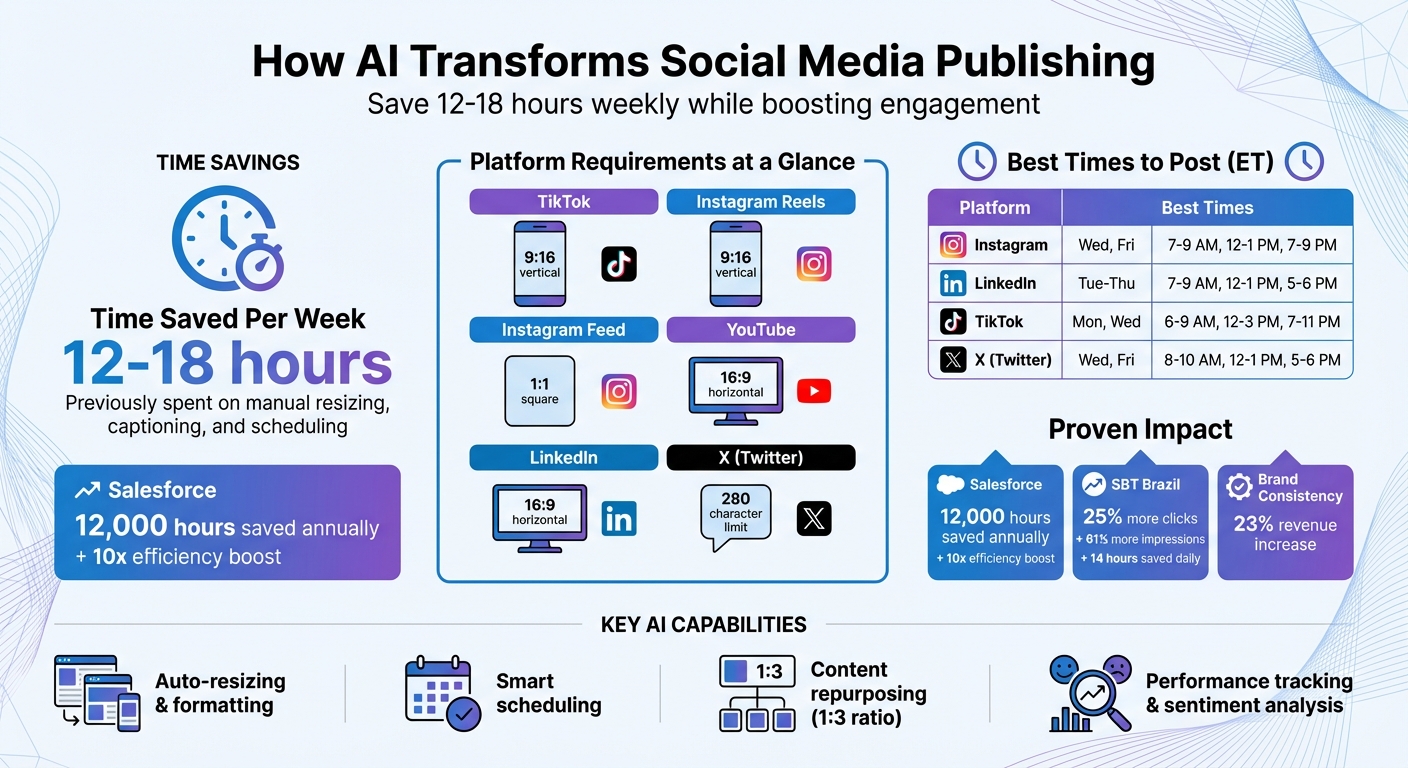
AI Social Media Publishing Time Savings and Platform Optimization Guide
AI Social Media Automation: Post Reels, Shorts & TikToks 100% on Autopilot!
Cross-Platform Challenges AI Can Solve
Publishing the same content across multiple platforms can feel like a juggling act. Each platform has its own quirks, from formatting requirements to audience preferences, making manual adjustments a time-consuming headache. That’s where AI steps in, streamlining processes while keeping your brand voice intact. Let’s break down how AI tackles these challenges.
Different Requirements for Each Platform
Every platform has its own set of rules when it comes to formatting. For example, Instagram Reels need vertical 9:16 videos, YouTube prefers horizontal 16:9, and Instagram feed posts look best as 1:1 squares. Then there’s text - X limits you to 280 characters, while LinkedIn encourages longer, more detailed posts. Adjusting media dimensions and rewriting captions for each platform can eat up hours of your time.
AI tools simplify this by resizing media instantly to fit each platform’s specifications and tweaking captions to match character limits. For instance, an in-depth LinkedIn post can be transformed into a snappy X update, complete with hashtags and emojis tailored to that platform’s style. This automation saves time while ensuring your content fits seamlessly wherever it’s posted.
Managing Time Zones and Scheduling
When your audience spans multiple time zones, timing your posts becomes tricky. A 9:00 AM post in New York might hit too early for followers in Los Angeles, potentially missing engagement opportunities. And if your audience is global, the challenge grows even bigger.
AI scheduling tools solve this by analyzing past engagement data to pinpoint the best times to post. They automatically adjust for time zone differences, ensuring your content reaches the right people at the right time. For example, an AI tool can stagger posts to hit peak engagement windows across Eastern, Central, Mountain, and Pacific Time zones. This kind of precision means you only need to schedule your content once, and the AI takes care of the rest.
Keeping Your Brand Consistent
Even after tailoring content for different platforms and scheduling it strategically, maintaining a consistent brand voice is essential. Platforms like LinkedIn often call for a professional tone, TikTok thrives on authenticity, and X rewards clever, concise messaging. When rewriting content manually, it’s easy for your voice to drift.
AI tools help maintain consistency by using brand voice presets. These presets ensure your tone and messaging align with your brand’s personality, even as they adapt to fit the culture of each platform. Once you set your guidelines, the AI applies them across all posts. As Jasper AI puts it:
Jasper's IQ layer brings your brand guidelines, tone, and messaging into every asset, ensuring authenticity and alignment - no matter who's creating.
Staying consistent isn’t just about aesthetics - it can also drive results. Consistent brand presentation across platforms has been shown to increase revenue by up to 23%. That’s a compelling reason to let AI take the reins on cross-platform management.
Setting Up an AI-Powered Social Media Workflow
To create an effective AI-powered workflow, start with a strong foundation. Use high-performing, evergreen content - like webinars, podcasts, or product demos that consistently draw attention - and pair it with well-defined brand guidelines. These guidelines should outline your voice, tone, and visual identity, along with clearly established content pillars that align with your marketing objectives. This setup ensures that AI tools can enhance every stage of your content creation process.
Preparing Your Content for AI Tools
Before introducing AI into your workflow, take stock of what you already have. Review your existing content and pinpoint assets with high engagement - these are perfect candidates for repurposing. A good rule of thumb is the 1:3 repurposing ratio: transform one long-form piece into three shorter, platform-specific formats. For instance, a 10-minute product demo could be broken into five 30-second clips tailored for various platforms. This approach is especially valuable since posts featuring videos tend to receive 48% more views on social media.
Turning Long Videos into Platform-Specific Content
AI tools make video repurposing much easier. Take OpenClip, for example: it uses AI to transcribe videos, identify speakers, and create clips formatted for different platforms - like 9:16 vertical for TikTok and Reels, 16:9 horizontal for LinkedIn, and 1:1 square for Instagram feed posts. Its smart clip scoring feature highlights the most engaging moments, helping you decide what to publish. Plus, it allows you to edit videos simply by modifying the transcript, making the process accessible even if you're not a video editing expert. Once the AI generates clips, review and refine them to ensure they reflect your brand's tone and insights.
Simplifying Team Approvals with AI
Managing approvals can be chaotic, but AI tools help centralize and streamline the process. Platforms with role-based assignments - like Creator, Reviewer, and Approver - clarify everyone's responsibilities. Visual status labels such as "Draft", "Pending Approval", and "Scheduled" make it easy to track content progress. OpenClip’s collaboration features allow all team members to review and approve clips before they go live, ensuring the final product aligns with brand standards. These streamlined workflows save time and improve efficiency, no matter the size of your team.
sbb-itb-5598afdScheduling and Publishing with AI
Once your content is ready, AI can take over the heavy lifting of scheduling and publishing. Forget juggling multiple logins - AI tools analyze engagement data and automatically schedule posts. This not only saves you time but also ensures your content reaches your audience when they're most likely to interact with it.
Creating a Multi-Platform Content Calendar
A unified content calendar simplifies the entire publishing process, especially when you're managing multiple platforms. With AI-powered tools, you can oversee all your social accounts from one central dashboard. This gives you a clear view of your content schedule and makes managing it far more efficient.
For consistency, aim to schedule content 1–2 weeks in advance. This approach keeps your posting regular while leaving room for any last-minute updates or spontaneous posts. Tools like OpenClip make this process seamless by integrating directly with platforms like TikTok, Reels, Shorts, X, and LinkedIn. You can easily queue AI-generated clips alongside your other content, ensuring everything is organized and ready to go.
Automated Scheduling and Publishing
AI doesn’t just handle the logistics of posting - it also pinpoints the best times to publish for maximum engagement. By analyzing 16 weeks of engagement data, AI tools highlight peak activity periods, ensuring your content gets the attention it deserves.
Platform Best Days Best Times (ET) Instagram Wed, Fri 7–9 AM, 12–1 PM, 7–9 PM LinkedIn Tue–Thu 7–9 AM, 12–1 PM, 5–6 PM TikTok Mon, Wed 6–9 AM, 12–3 PM, 7–11 PM X (Twitter) Wed, Fri 8–10 AM, 12–1 PM, 5–6 PMBeyond timing, AI also adjusts captions, hashtags, and tone to fit each platform’s unique requirements. For instance, OpenClip ensures your video clips are formatted correctly - 9:16 vertical for TikTok and Reels, 16:9 horizontal for LinkedIn - so they look great wherever they’re posted.
The impact of AI-powered scheduling is clear. In 2025, Brazilian company SBT adopted AI tools and saw impressive results: a 25% boost in daily clicks, a 61% increase in organic impressions, and 14 hours saved per day.
"AI scheduling tools can also analyze when your followers are actually online and suggest the best time to post."
- Georgi Todorov, Founder, Create & Grow
With OpenClip, you can batch-create and schedule repurposed video clips across multiple platforms after review and approval. Once scheduled, the tool handles everything - from formatting to publishing - at times when your audience is most active. This end-to-end automation not only simplifies your workflow but also sets the stage for detailed, data-driven performance tracking.
Tracking Performance and Improving Your Workflow
Once your content is live, AI steps in to simplify performance tracking. By consolidating analytics from Instagram, LinkedIn, X, and TikTok into a single dashboard, it eliminates the hassle of juggling multiple logins. This unified approach allows for real-time monitoring of key performance indicators (KPIs) like engagement, reach, and more - all in one place.
But AI doesn’t stop at surface-level metrics like likes or shares. Through natural language processing (NLP), it dives deeper, analyzing the sentiment and context behind comments and direct messages. This means you’re not just measuring engagement volume - you’re also understanding the tone of your audience’s reactions. For instance, Mercedes-Benz used AI to track emotion-specific keywords across Instagram, Twitter, and Facebook during its "The Moody Colors of Poland" campaign. This allowed them to adjust showroom and billboard lighting in real-time, reflecting the audience's mood - like switching to energetic yellow or calm green.
Viewing Analytics Across All Platforms
AI-powered dashboards give you a bird’s-eye view of what’s working and what’s not. They let you track metrics like views, watch time, saves, and shares for each piece of content, helping you identify patterns across platforms. Even better, these tools can flag unusual behavior - like posts that perform way above or below average - so you can replicate successes or steer clear of past mistakes. A great example is Salesforce, whose social media team used AI automation across over 150 channels, boosting efficiency tenfold and saving a staggering 12,000 hours annually.
Using Data to Improve Content and Timing
Performance data isn’t just for reflection - it’s a tool for growth. AI helps refine your strategy by identifying which content pillars (like how-to guides or industry insights) drive the most meaningful engagement. By analyzing data over three to six months, you can spot long-term trends and adjust your approach accordingly.
AI also offers predictive modeling, forecasting how future posts might perform based on past engagement, visuals, and hashtags - even before you publish. This takes the guesswork out of experimenting with formats or posting schedules. For instance, if AI suggests that question-based headlines could boost engagement by 65%, you might decide to use them more often.
"As it evolves, analytics will shift from providing the numbers to providing advice and predictions to help you achieve your goals - your very own strategy assistant."
- Andrei Serbanoiu, Co-Founder, Socialinsider
AI can also recommend the best times to post based on your audience’s activity, offering insights tailored specifically to your followers rather than relying on generic industry benchmarks. To keep these recommendations sharp, regularly update your AI’s training data as your brand voice and social trends evolve. And as analytics shape your content strategy, efficient collaboration within your team can amplify the impact of your efforts.
Growing Your Team with OpenClip
AI-driven insights are powerful, but combining them with strong team collaboration can take your workflow to the next level. Tools like OpenClip are designed to help scale your cross-platform strategy efficiently. For example, OpenClip’s Business plan (priced at $29/month) includes features like team invites, unlimited brand profiles, priority processing queues, and built-in commenting. It also offers permission-based sharing, allowing multiple team members to manage, review, and approve content from a single dashboard[OpenClip pricing].
This "human-in-the-loop" approach ensures that while AI handles the heavy lifting, your team still provides the strategic oversight needed for meaningful results. Together, AI and collaborative tools like OpenClip can streamline your workflow while keeping your brand’s unique voice and goals at the forefront.
Conclusion
Gone are the days of spending endless hours resizing, reformatting, and scheduling content for multiple platforms. AI has completely reshaped this process. By automating tasks like adjusting aspect ratios, creating platform-specific captions, and identifying the best times to post, tools such as OpenClip take care of the repetitive work. This allows teams to focus on what truly matters: strategy and genuine engagement.
Take the Arizona Cardinals, for example. They managed to reduce reporting time by an impressive 90% while increasing social interactions by 15%. Similarly, Stuckey's experienced a staggering 750% growth in online sales.
For creators and businesses in the U.S., this shift is a game-changer. Instead of dedicating 10 to 15 hours each week to manually posting and formatting content, you can redirect that time toward understanding your audience, honing your messaging, and building meaningful relationships. AI tools handle transcription, clip creation, and scheduling, giving you the freedom to focus on the bigger picture. This transition from manual work to strategic thinking turns routine social media management into a powerful competitive edge.
"By offloading repetitive tasks to AI, social teams can finally focus their human energy on the high-value activities that matter most: strategy, authentic connection, and deep creative insight." - Dima Botezatu, Mixpost
FAQs
How does AI figure out the best times to post on social media?
AI pinpoints the optimal times to post by diving into details like past engagement trends, audience activity habits, and time zone variations. Using machine learning, it predicts when your audience is most likely to engage with your content on different platforms.
By blending real-time behavior data with seasonal and regional patterns, AI ensures your posts connect with the right audience at the perfect moment, boosting both visibility and interaction.
What are brand voice presets, and how do they ensure consistent messaging across platforms?
Brand voice presets are like shortcuts for maintaining your brand’s personality across all your content. These pre-set configurations allow AI tools to fine-tune the tone and style of your writing automatically, ensuring it aligns with how your brand wants to come across - whether that’s professional, fun, or authoritative.
With these presets, every caption, headline, or description consistently mirrors your brand’s identity without needing constant manual tweaks. They also help your content remain uniform across platforms, even when adapting to different formats like shorter character limits or unique visual layouts. The result? A consistent tone that strengthens your branding, avoids mixed messages, and delivers a seamless experience for your audience across all channels.
How does AI improve collaboration for social media teams?
AI tools make managing social media tasks easier by providing a shared, real-time workspace. Teams can handle, edit, and schedule content all in one place. With features like unified content calendars, AI-generated captions, and automated scheduling, everyone stays on the same page without juggling multiple logins.
Platforms such as OpenClip take things a step further, especially for video content creation. AI takes care of time-consuming tasks like transcribing long-form videos, identifying speakers, and creating short-form clips tailored for platforms like TikTok, Reels, and LinkedIn. Teams can collaborate by reviewing, annotating, and scheduling these videos together. This approach keeps campaigns organized, ensures brand consistency, meets posting deadlines, and saves both time and effort.
Turn one video into a week of content.
Try OpenClip free